by Fabio Seime
From human to human
The valuable contribution that the employees of a workshop for people with disabilities for people with disabilities make to a high-tech company and why this is about much more than just profitable business relationships. A visit to the site shows why this is about much more than that.
Diesen Beitrag teilen

Both agree: this work is an important contribution against the shortage of skilled workers and ensures that companies in the region can continue to produce regionally. As part of a future-oriented digitalization strategy, Micro-Hybrid is also focusing on increasing digitalization and automation in electronics production. "But there are simply activities that still have to be done by people. And here, the shared team spirit is one of the most important quality factors." Dr. Baumgärtel commented during the tour of the production area. Especially with regard to the shortage of skilled workers, to strengthen the social environment of the employees of local companies, the Saale-Holzland-Kreis region must become more attractive. The relationship between the people of the Holzland workshops and those of Micro-Hybrid is a sign of appreciation and thus indispensable for sustainable growth for companies and the region.
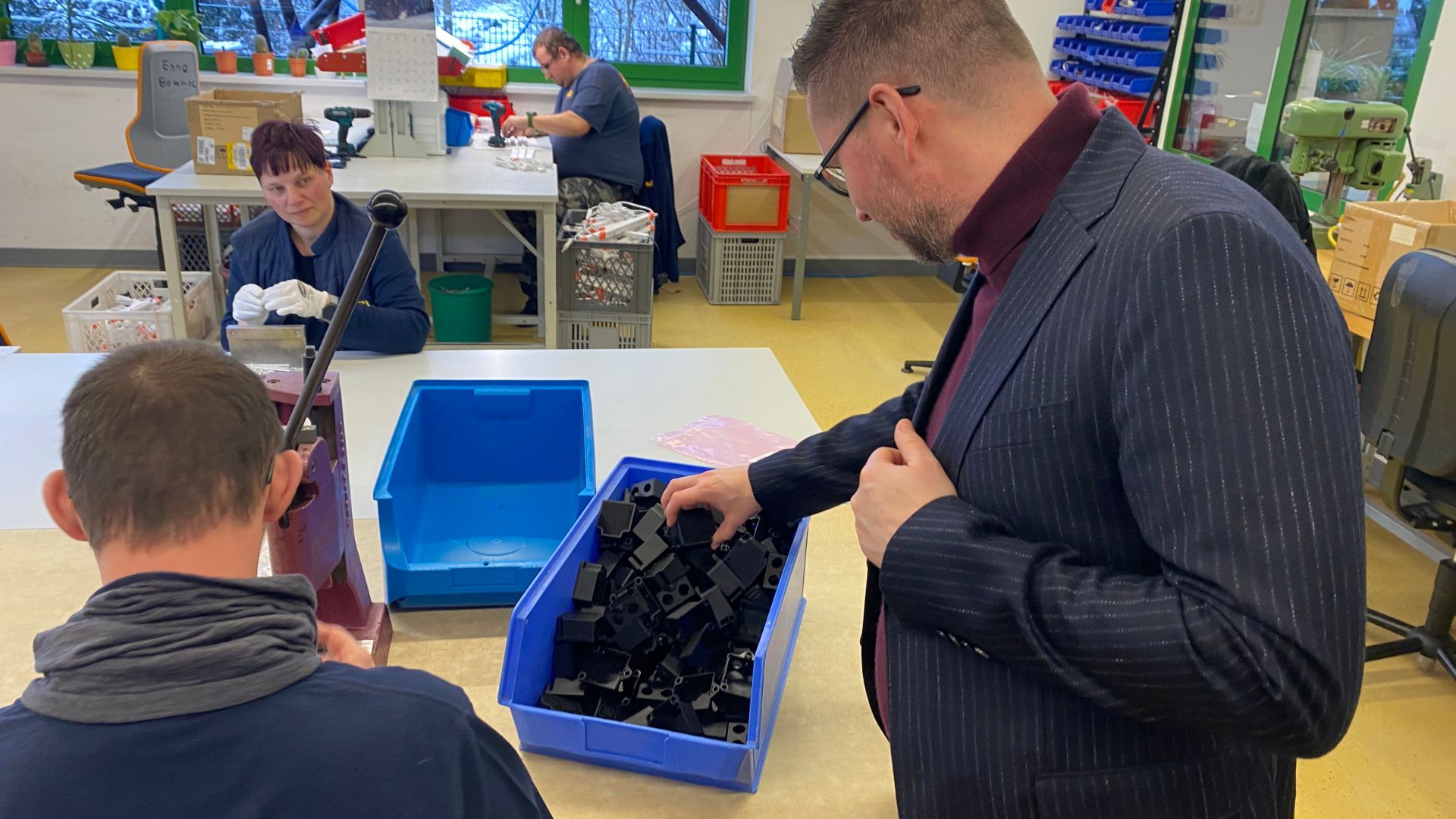
ASB employees in Bad Klosterlausnitz are also involved in product innovations. Here, the sensor housings for a new type of inertial sensor, which detects the inclination of heavy machine parts such as excavators, cranes, etc. in space, are pre-assembled.
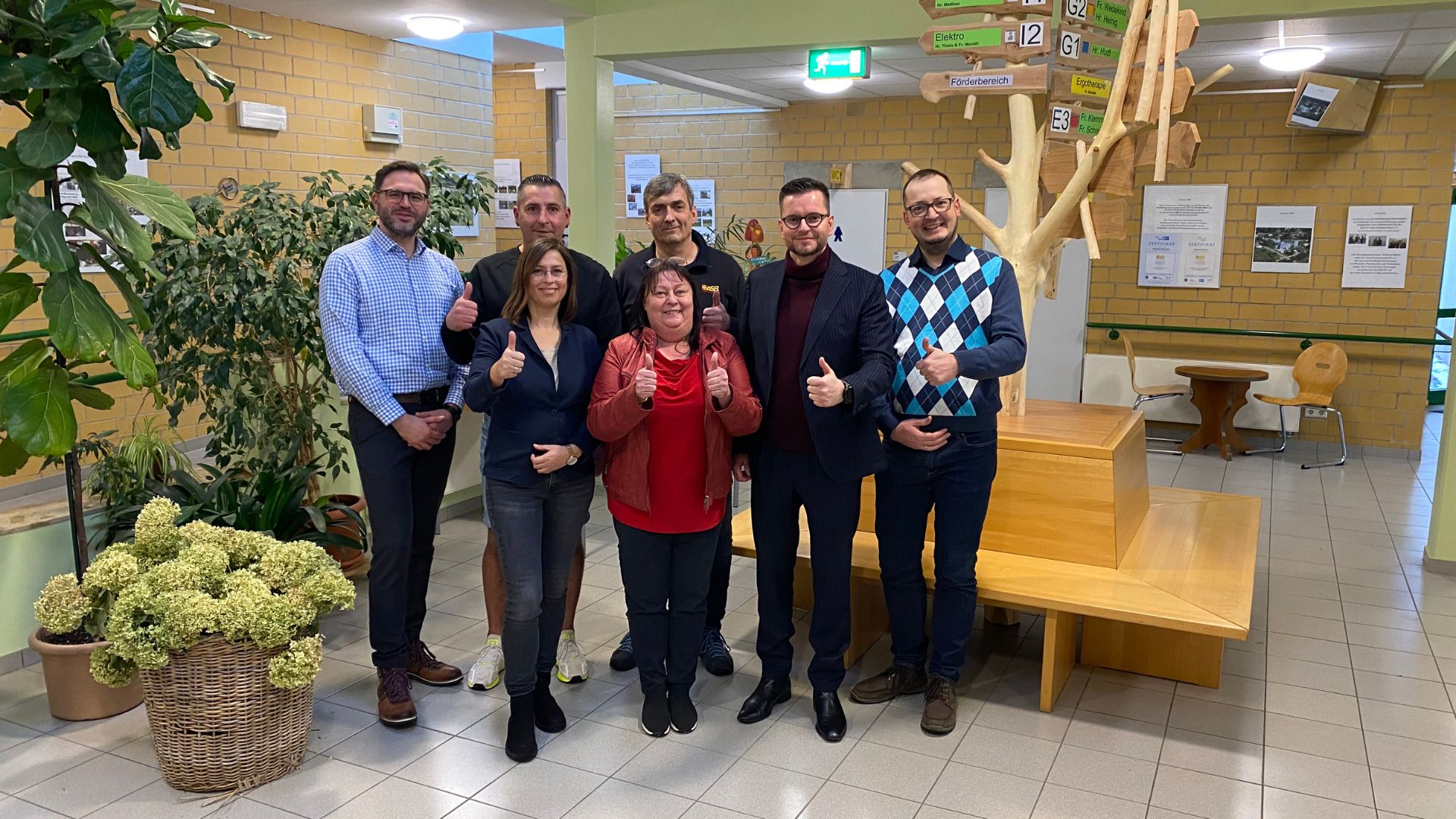
Visiting the wood workshops of the ASB Kreisverband SHK, a workshop for people with disabilities, Dr. Knuth Baumgärtel, General Manager Micro-Hybrid Electronics, was able to gain impressions of the great joy of the employees in processing orders for the Thuringian high-tech company. The meeting of the managing director with representatives of the workshop for people with disabilities and the ASB Kreisverband SHK and the associated partners of the paritätische Kreisgruppe served as a joint exchange about the cooperation between industrial companies and the Holzlandwerkstätten, which has existed for more than 12 years.

Division Manager Jörg Thiele is visibly proud of the commitment shown by his team, the employees and their supervisors.
The demands on the quality of the components are high. After all, they are used in other production processes to manufacture infrared components, electronic circuits and sensors for medical technology, environmental technology, aerospace technology and many more. "Our company has been cooperating with the Holzlandwerkstätten for many years. About 12 years ago, we were able to transfer one of our machines from production at the Hermsdorf site directly here to the Holzlandwerkstätten. The thermoforming machine is used to produce shipping and production packaging for our infrared components. This work is an important building block in our supply chain." Explains Dr. Baumgärtel during the tour of the machine and the demonstration by its operator, an employee of the Electrical, Metal, Landscape workshop.