
MISSION TO MARS
High-performance electronics from Micro-Hybrid offer spectaculare discoveries on the red planet - for 25 years.
For seven Mars missions the Thuringian high-tech company has developed sensor technology that can withstand the toughest conceivable requirements.
Diesen Beitrag teilen

The objective of all missions: Examine geological formations for their composition and find the indication of possible life forms. The challenge: During take-off from Earth, heat, pressure and vibrations act on the components. During the flight, the low ambient temperature should not damage the technology, and on landing, in addition to the extreme temperature fluctuations, there is also a high mechanical load due to the impact during touchdown. And as if that wasn't bad enough, the average temperature on Mars is minus 65 degrees Celsius.
Micro-Hybrid's electronics were used in all missions either in the so-called alpha proton X-ray spectrometer or a Mößbauer spectrometer. Both instruments examine the composition of samples in different ways.
The initiator of the Micro-Hybrid Mars projects is development engineer Karl-Heinz Suphan, who was in charge of all projects. A network ace with invaluable expertise in special applications. Driven by his enthusiasm for space research projects, the graduate development engineer has been coordinating cooperation with scientific institutions for participation in American, European and Russian Mars missions since 1992.
In 1997 the team lead by Karl-Heinz Suphan celebrated its first success. For more than two months, the rover "Sojourner" was on the mission on Mars, providing data and images of the red planet. Less than six years later, the most groundbreaking mission in NASA's history to date was started: The rovers Spirit and Opportunity were launched independently on Mars to search for evidence of water - the basic prerequisite for all life. The mission was a complete success for all partners, because Opportunity was able to actually prove with its instruments that there had once been liquid water on Mars. This discovery was made possible by the extremely miniaturized instruments APXS (Alpha proton X-Ray Spectrometer) and MIMOSII (miniaturized Mößbauer spectrometer), which were developed in Germany. Printed circuit boards and hybrid circuits were integrated into both instruments, which were developed and manufactured in Hermsdorf especially for these tasks.

After his successful career at Micro-Hybrid, Karl-Heinz Suphan is now relinquishing command - it's time for a well-deserved retirement. We say: Thank you for your unique expertise and inexhaustible thirst for research!
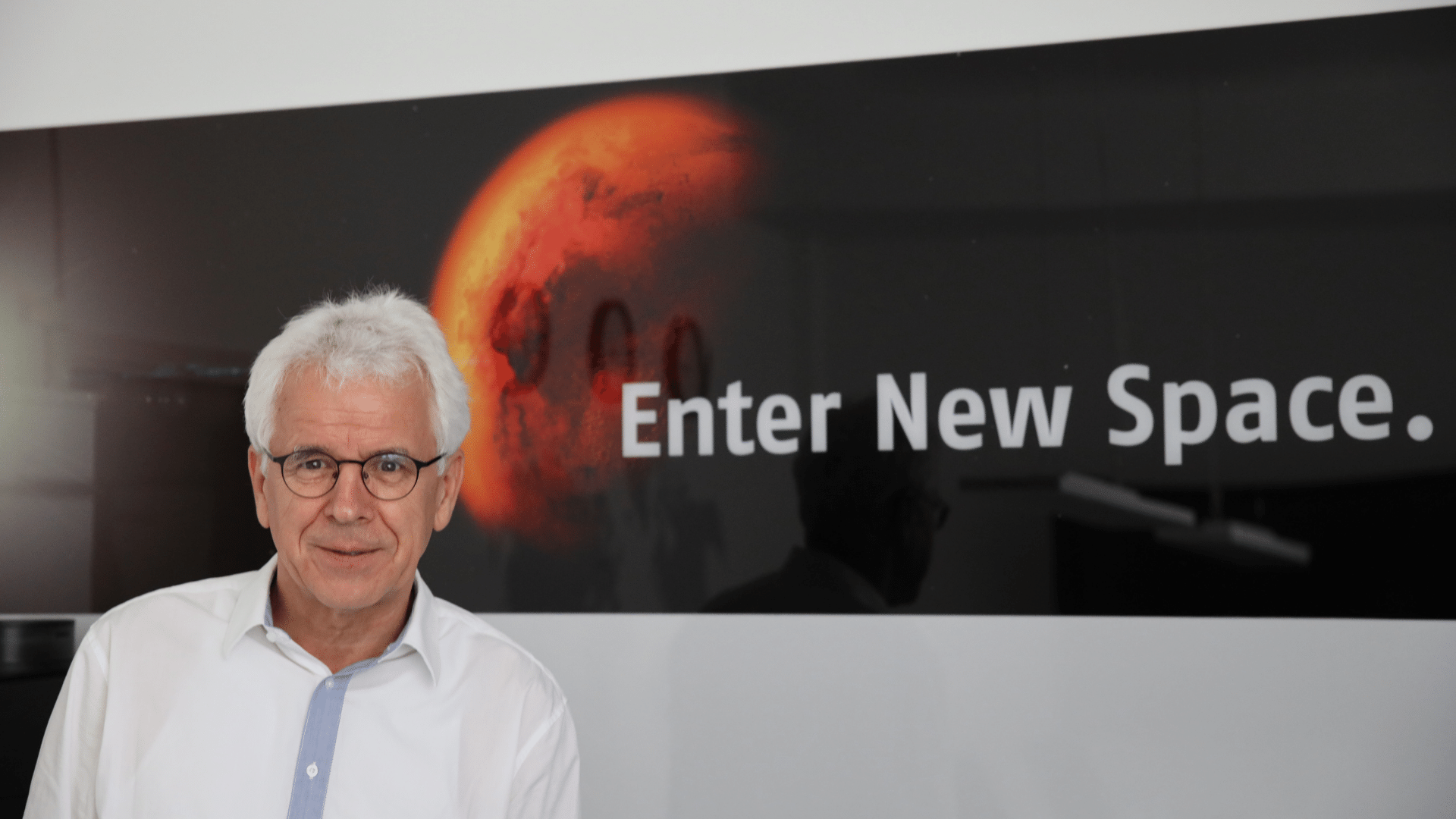
Mission accomplished!


